1.avif)
Recognizing the differences between US GAAP (Generally Accepted Accounting Principles) and IFRS (International Financial Reporting Standards) is crucial for US business owners to make informed decisions that impact their financial reporting.
Both frameworks serve the same purpose, providing a set of guidelines for companies to follow when preparing financial statements. However, their approach and application can differ significantly, especially if you're operating internationally or considering expanding your business outside the US.
This blog will explore the key differences between US GAAP vs IFRS and how each system impacts your US business.
GAAP refers to the standardized set of accounting principles, standards, and procedures used in the United States to prepare financial statements. These guidelines are established by the Financial Accounting Standards Board (FASB) to ensure that companies report their financial performance consistently and accurately.
By following GAAP, businesses can present their financial information in a clear and transparent manner, allowing investors, regulators, and stakeholders to easily compare financial statements across companies. This consistency also builds trust and credibility, ensuring businesses meet the regulatory requirements for public reporting.
Also Read: How to Find The Right Accounting Outsourcing Services for USA Business?
To maintain this level of transparency and ensure compliance, VJM Global offers expert accounting services. We help businesses optimize their financial reporting processes, ensuring accuracy and compliance with both local and international standards.
Now that we understand what GAAP entails, let’s explore why following these principles is critical for businesses and stakeholders alike.
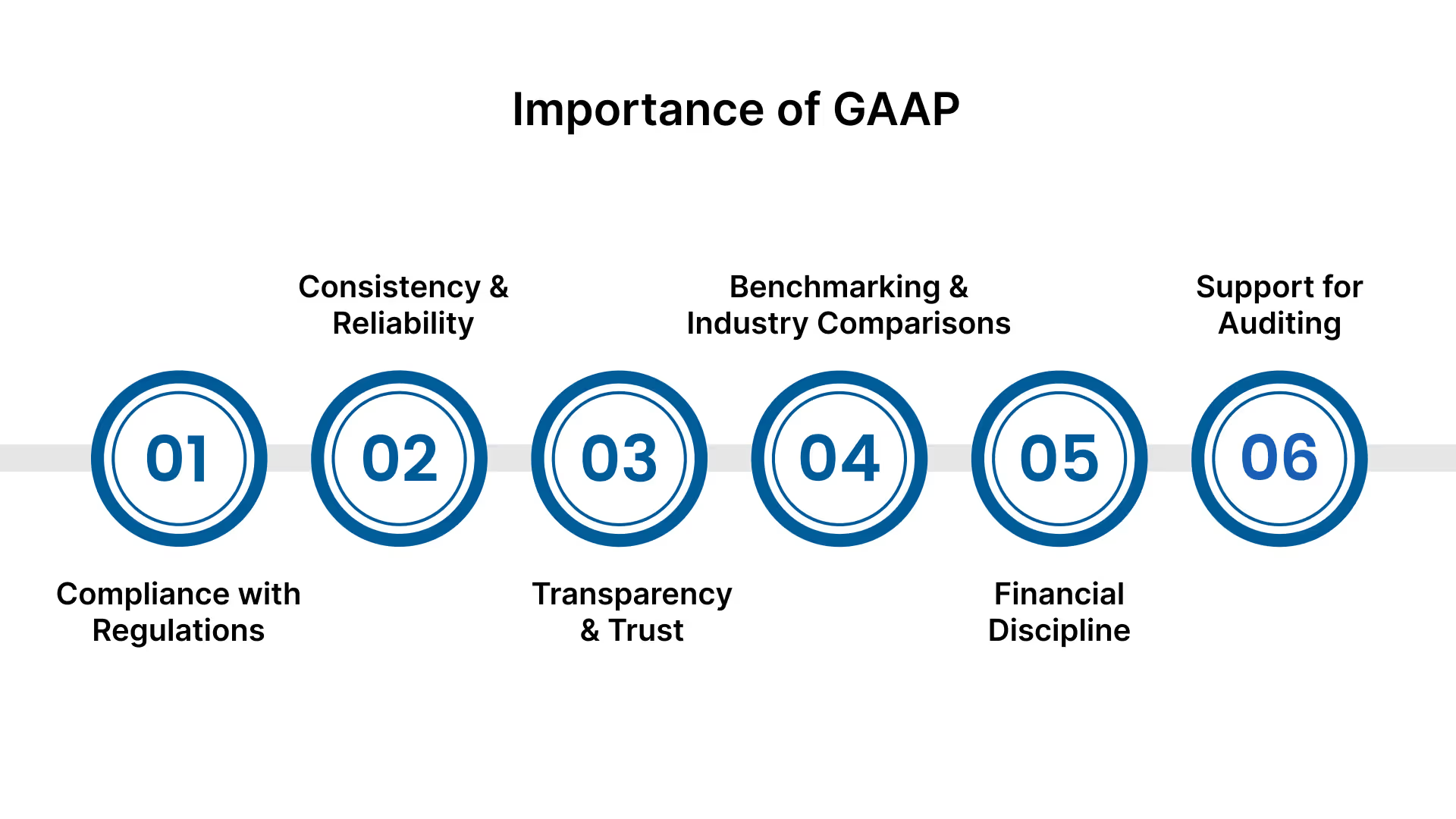
Adhering to GAAP is crucial for US businesses to ensure consistency and compliance in financial reporting. Below are some key reasons why GAAP is so important:
To grasp how GAAP works in practice, let’s examine the specific frameworks that underpin these principles, providing clarity and structure for businesses.
The framework of GAAP provides the foundation for how financial transactions should be recognized, measured, and reported by businesses. Here’s an overview of the key components that make up the GAAP framework:
ASC 606 provides a five-step model for recognizing revenue. This includes identifying contracts with customers, determining performance obligations, and allocating transaction prices. It ensures that businesses recognize revenue when control of goods or services is transferred to the customer, making the process more consistent across industries.
Under ASC 842, companies are required to recognize all leases on the balance sheet as both a right-of-use asset and a lease liability. This framework changes the way leases are classified and reported, aiming for more transparency on companies' lease obligations, which previously could remain off the balance sheet under ASC 840.
ASC 718 governs the accounting for stock-based compensation, outlining how businesses should measure and expense stock options, restricted stock, and other equity awards granted to employees. This standard ensures that companies accurately report the cost of employee compensation linked to stock grants and options.
ASC 350 provides guidance on how to account for and test the impairment of goodwill and other intangible assets. Under this standard, companies are required to assess goodwill for impairment annually, or more frequently if certain triggering events occur. This framework ensures that the financial statements reflect the true value of intangible assets.
ASC 320 establishes the guidelines for accounting for debt and equity securities. This framework requires businesses to classify and measure investments in securities based on their intent to hold them to maturity, for trading, or for available-for-sale purposes.
Also Read: Company Audit Checklist Guide for Businesses
Having a clear understanding of the GAAP framework prepares us to explore real-world examples of how these principles are applied across various accounting activities.
US GAAP provides specific guidelines for various accounting practices to ensure consistency and accuracy in financial reporting. Below are a few key examples of how GAAP is applied:
The matching principle under US GAAP states that expenses should be recorded in the same period as the revenues they help generate. For instance, if a company incurs costs to produce goods that are sold within the same period, those costs are matched with the revenue from those sales to provide a true picture of profitability.
US GAAP allows businesses to choose between different inventory valuation methods, such as FIFO (First In, First Out) or LIFO (Last In, First Out). The method chosen affects how the value of inventory is reported, particularly in times of inflation, as it determines the cost of goods sold and the valuation of remaining inventory.
Under US GAAP, depreciation is calculated using systematic and rational methods to allocate the cost of tangible assets over their useful lives. A common method is straight-line depreciation, where the asset's value is depreciated equally over its useful life.
Now that we've seen specific examples of GAAP, it’s time to turn our attention to IFRS, another crucial framework for international businesses, and understand how it compares to GAAP.
IFRS are the accounting standards set by the International Accounting Standards Board (IASB) and adopted by businesses worldwide. These standards provide a framework for preparing and presenting financial statements, promoting transparency and comparability of financial information across borders.
IFRS aims to bring uniformity to financial reporting, ensuring that companies in different countries report their financial data using consistent principles, which makes it easier for investors and stakeholders to evaluate the financial health of companies globally.
.avif)
For businesses, especially those operating in multiple countries or aiming to attract international investors, adopting IFRS brings several benefits:
Also Read: How to Find The Right Accounting Outsourcing Services for USA Business?
As we move forward, let’s explore the key principles and frameworks that make up IFRS, and how they ensure accurate financial reporting globally.
IFRS operates on a principles-based framework, which is different from the rules-based structure of US GAAP. Instead of providing detailed instructions for every type of transaction, IFRS sets broad principles that guide businesses in preparing their financial statements. Here are the key principles of IFRS:
According to IAS 2, inventory should be measured at the lower of cost and net realizable value. This ensures that companies do not overstate the value of their inventories, reflecting a more realistic picture of asset value and potential losses.
IFRS 9 focuses on the recognition, measurement, and impairment of financial assets and liabilities. It introduces a forward-looking approach for recognizing expected credit losses, marking a shift from the incurred loss model in previous standards, which is critical for businesses assessing their financial risks.
IFRS 15 establishes a comprehensive framework for revenue recognition, stating that revenue should be recognized when control of the good or service is transferred to the customer. This principle ensures that companies recognize revenue in a consistent manner across industries and transactions.
These broad principles allow for greater flexibility in reporting, but they also require businesses to use professional judgment in applying them.
Understanding the core principles of IFRS is essential, but to appreciate their full impact, let’s examine how these standards are applied in practice through specific examples.
IFRS has several unique features compared to US GAAP, offering flexibility and broad guidelines for financial reporting. Here are a few key examples:
Under IFRS, revenue is recognized when control of goods or services is transferred to the customer. This may differ from US GAAP, which often recognizes revenue when the risks and rewards of ownership are transferred.
IFRS provides businesses with the option to report certain assets, such as property, plant, and equipment, at their fair value instead of historical cost. This is particularly useful for assets that are subject to frequent market fluctuations, such as real estate or financial instruments.
Under IFRS 16, companies are required to recognize most leases on their balance sheets, meaning that leased assets and corresponding liabilities must be reported. This is in contrast to US GAAP, which distinguishes between operating leases and capital leases, allowing some leases to remain off the balance sheet.
Also Read: Company Audit Checklist Guide for Businesses
Now that we’ve looked at how IFRS works in practice, it’s important to compare it directly with GAAP to highlight their key differences and similarities.
The differences between US GAAP and IFRS can significantly impact how businesses report their financial position and performance. The table below outlines the key differences:
With a clear understanding of these differences, it’s also important to explore how GAAP and IFRS affect specific industries, as their application can vary depending on sector-specific needs.
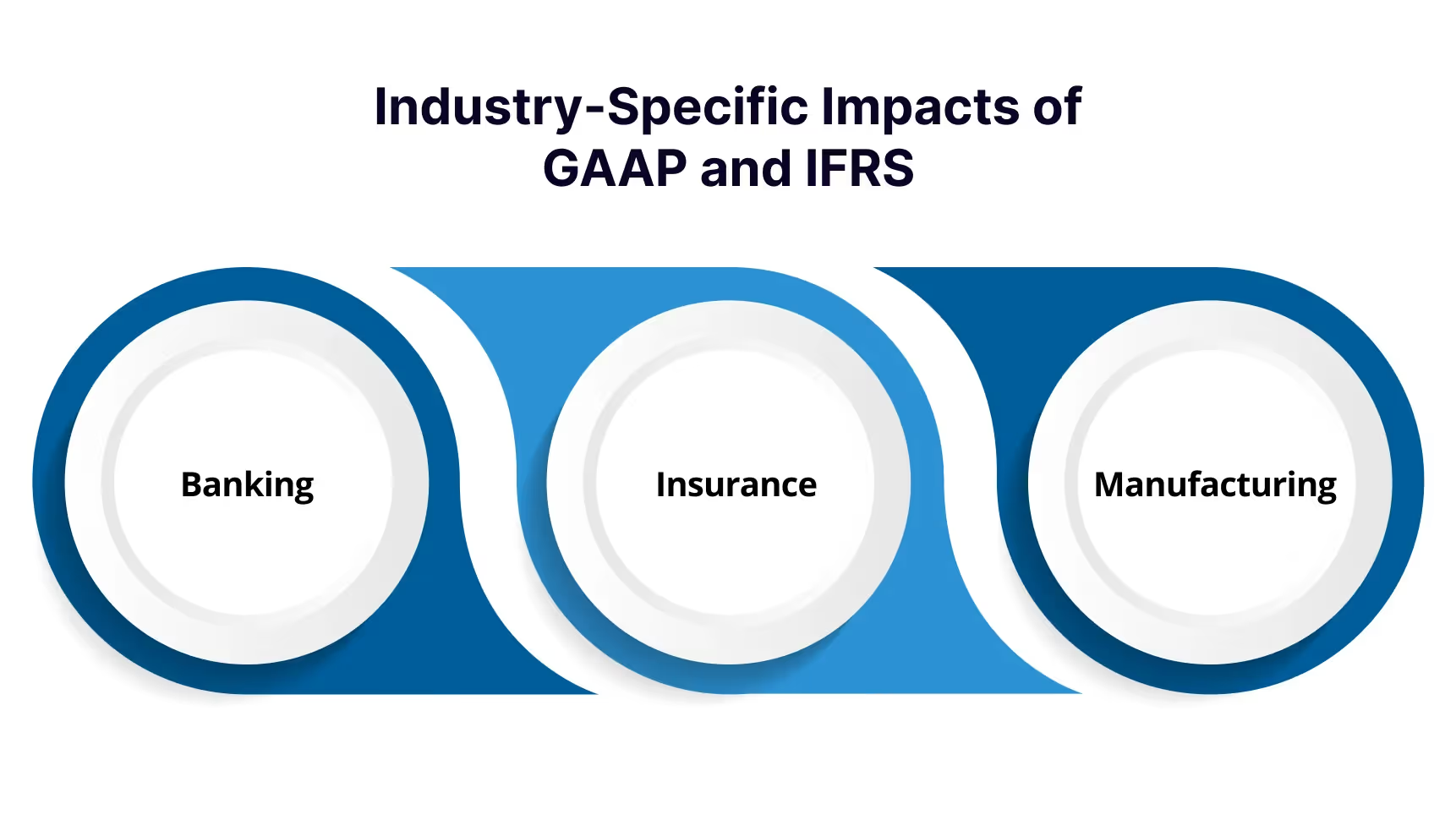
The differences between US GAAP and IFRS can have significant implications across different industries, affecting how businesses in those sectors report their financial performance. Here's how each framework impacts various industries:
Also Read: How to Find The Right Accounting Outsourcing Services for USA Business?
Now that we understand the industry-specific implications, let’s weigh which of the two frameworks, GAAP or IFRS, is the better choice for your business.
The decision of whether US GAAP or IFRS is the better choice depends largely on your business operations, goals, and future plans. Here’s a breakdown to help determine which framework might be more beneficial:
If your company operates primarily within the US or is publicly traded in the US, US GAAP may be the better choice due to its highly detailed, rules-based structure. The clarity and consistency that US GAAP offers are particularly beneficial for smaller businesses or those with more straightforward financial activities.
If your business is planning to expand or already operates globally, IFRS offers greater flexibility and global compatibility, which can help facilitate reporting and compliance in international markets. Many countries require or prefer IFRS for their financial reporting, making it essential for businesses involved in global trade or investment to adopt this framework.
Ultimately, understanding both frameworks and their application can help businesses make an informed choice about which reporting standard is right for them.
If you’re planning to expand your business into India, VJM Global can support you in adjusting to the regulatory system. We specialize in company registration in India, assisting US entrepreneurs, SMEs, startups, and professional service firms in setting up branch offices, liaison offices, or private limited companies.
Understanding the key differences between US GAAP vs IFRS is essential for US business owners and entrepreneurs, especially if you plan on operating internationally or seeking foreign investment. While US GAAP offers a detailed, rules-based approach, IFRS provides a more flexible, principles-based framework. The right choice for your business depends on your industry, international exposure, and long-term goals.
VJM Global provides tailored solutions to help US businesses optimize their financial operations, ensuring compliance with both FASB and IFRS standards. With our expertise, we help you overcome the complexities of financial management while ensuring regulatory compliance.
Schedule a demo with VJM Global to explore how we can support your financial strategy and ensure adherence to FASB and IFRS compliance.
US GAAP is rules-based and more detailed, while IFRS is principles-based, allowing for greater flexibility in application.
IFRS is the global standard, facilitating consistent and comparable financial reporting across international markets.
Yes, US GAAP is more detailed and prescriptive, which can make it more complex than IFRS, which relies on broader principles.
While US GAAP is required for US companies, those with international operations or plans to go global may choose to adopt IFRS for compatibility.
For small businesses operating primarily within the US, US GAAP is typically more suitable due to its structured guidelines and familiarity. However, global expansion may require IFRS adoption.